
Table of Contents
Practicing yoga is more than just rolling out a mat and stretching — especially for new learners in cities like Chennai. To start properly and stay consistent, you need the right tools, space setup, and a realistic budget plan. In this guide, we’ll cover:
- ✅ Essential gear for yoga
- ✅ Recommended accessories & “nice-to-have” items
- ✅ Approximate price ranges (India / Chennai market)
- ✅ Budget plan for first 3–6 months
- ✅ Yoga class / training cost ranges in Chennai
- ✅ Pros & cons of minimal vs full setup
- ✅ How to shop smart — best practice for locals
- ✅ How to choose what you need depending on your yoga goals
This is built especially for beginners, and designed to help you avoid unnecessary spending while building a sustainable yoga practice.
Many beginners underestimate the importance of proper gear. But here’s why it matters:
- Comfort & Safety: A good yoga mat cushions knees, protects wrists, and prevents slipping during asanas — essential especially on hard floors or humid Chennai mornings.
- Consistency: When you have a dedicated mat & space, you’re more likely to treat yoga as a habit, not a random hobby.
- Hygiene & Longevity: Shared mats or towels (in gyms or group studios) can be unhygienic; owning your gear ensures hygiene.
- Versatility: With props like blocks, straps, blankets — you can practice varied yoga styles (Hatha, Ashtanga, Yin, Restorative) comfortably.
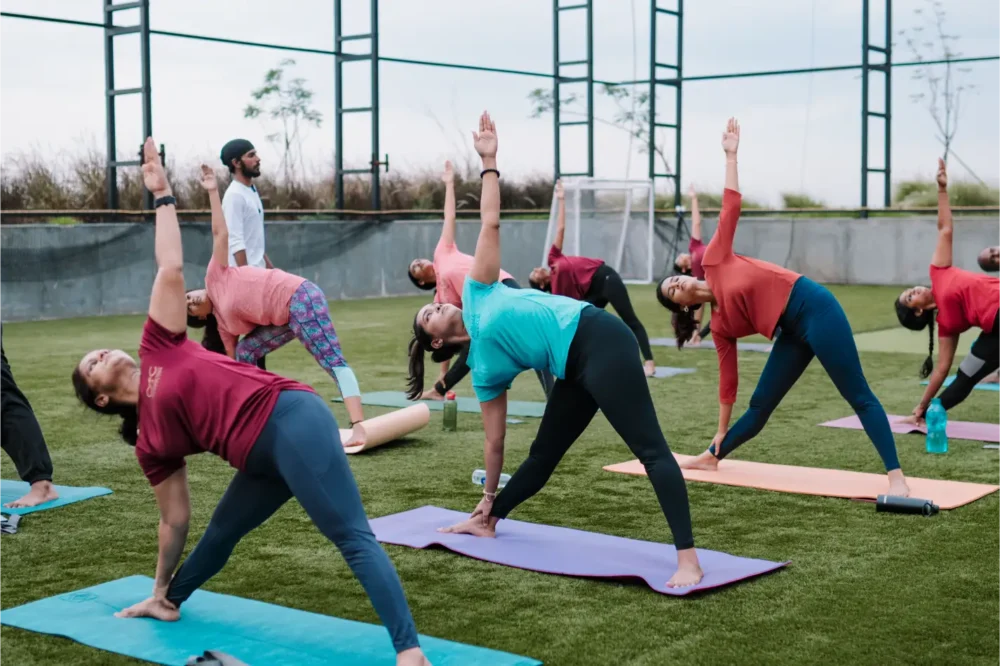
- Outdoor & Home Flexibility: In Chennai, many prefer early-morning beach or park yoga — proper mat and gear make outdoor practice feasible.
So for a long-term commitment, starting with correct equipment pays off.
Here is a breakdown of key items you may need — from must-have essentials to optional props — along with real-world price ranges based on current Indian retail / wholesale markets.
| Gear / Item | Purpose / Use | Typical Price Range* (INR) |
|---|---|---|
| Yoga Mat (PVC / TPE / Natural Rubber / Jute) | Base cushioning, grip, hygiene | ₹400 – ₹3500 |
| Yoga Block(s) | Support for poses (flexibility, balance) | ₹300 – ₹800 (per block) — many mats come in bundles or local store sets |
| Yoga Strap / Belt | Helps in stretching, alignment, deeper poses | ₹200 – ₹500 |
| Yoga Towel / Sweat Towel | For hygiene — especially when sweating (Chennai weather) | ₹150 – ₹400 |
| Water Bottle | Hydration during sessions | ₹150 – ₹500 (reusable bottle recommended) |
| Yoga Blanket or Extra Mat | Extra cushioning for restorative/prenatal/yin yoga | ₹500 – ₹1200 |
| Comfortable Clothing (cotton/athleisure / moisture-wick) | Flexibility and comfort during asanas | ₹400 – ₹1200 per set |
| Mat Bag / Carry Bag | For portability, especially for outdoor yoga / classes | ₹250 – ₹600 |
| Optional: Non-slip Grip Socks / Gloves | Useful if practising on smooth or tiled floors, or when slipping | ₹200 – ₹400 |
| Optional: Yoga Bolster / Cushion / Meditation Cushion | For seated poses, meditation, restorative yoga | ₹600 – ₹1500 |
*Price ranges are approximate retail/rates available across India — seen in wholesale and retail marketplaces.
Note: For a beginner, a basic mat + towel + water bottle + comfortable clothes is enough. Props and advanced accessories are optional, depending on your yoga style.
If you are new to yoga and want to start with minimal investment — here’s your starter kit (essential only):
- Yoga mat (PVC / affordable)
- Towel / Sweat towel
- Water bottle
- Comfortable clothing (T-shirt + trackpants or yoga pants)
- Mat bag (optional but handy if you travel or practise outdoors)
Estimated Cost (One-time): ₹800 – ₹1,500.
This setup is enough for home practice, online sessions, or outdoor group yoga — and helps you start without overwhelming cost.
As you progress beyond beginner poses — or if you aim for deeper flexibility, restorative or alignment-focused yoga — these additional items become valuable:
- Yoga blocks & strap: help in hamstring stretches, forward folds, alignment.
- Blanket/bolster: useful for yin/restorative/prenatal yoga.
- Grip socks or non-slip mats: for sweaty humidity days or slippery floors.
- Extra thickness mats: for joint comfort (knees, wrists, spine).
Think of these as tools to enhance your practice — but only invest when you feel more consistent and committed.
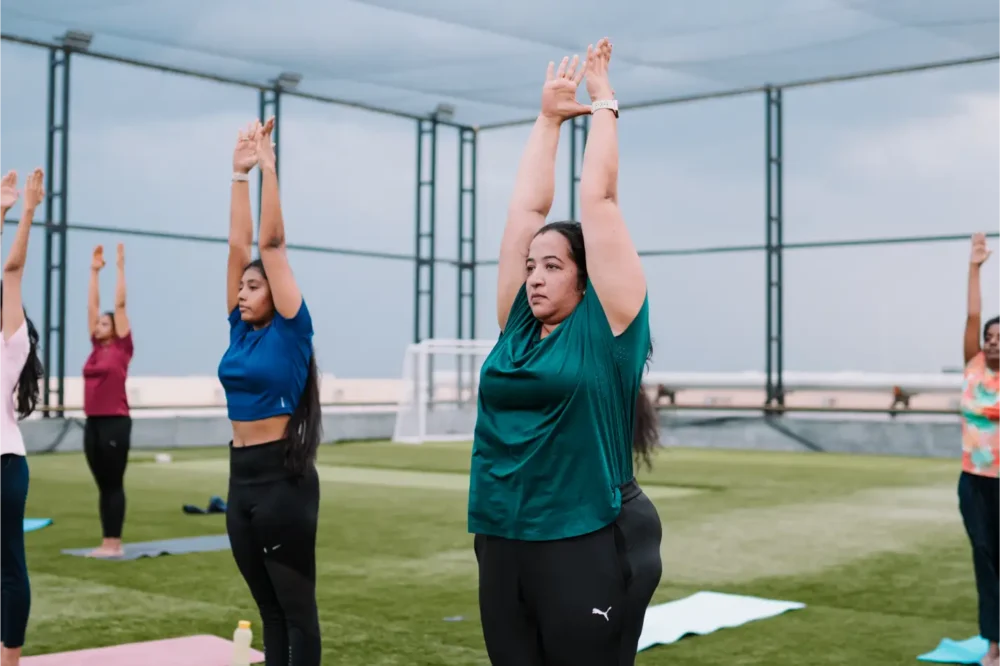
Many beginners wonder whether to just practise at home or join guided classes. Below are typical price ranges for various yoga learning options in Chennai as of 2025:
| Type of Yoga Class / Training | Approx. Cost / Month or Per Class |
|---|---|
| Studio-based indoor yoga class (group) | ₹3,000 – ₹4,500 per month |
| Outdoor group yoga / beach / park yoga | ₹2,500 – ₹5,000 per month (depending on location & frequency) |
| Online yoga class/subscription (live or recorded) | ₹2,500 – ₹4,000 per month (for regular access) |
| Private/personal yoga instructor (1:1) | ₹1,000 – ₹2,000 per session (or package-based) |
| Drop-in class / Single session pass | ₹300 – ₹700 per session depending on studio/coach |
Observations / What this means for learners:
- For many beginners, outdoor group yoga or online yoga provides a balance of affordability + flexibility.
- If you want personal attention or therapy, private sessions are best — but more expensive.
- Gear + class combo in the first 3–6 months can still stay within ₹3,000–₹5,000 per month depending on frequency.
Here is a sample budget plan for a beginner in Chennai for first 6 months:
Month 0 (Initial investment):
- Yoga mat + towel + bottle + clothes → ~ ₹1,200
Months 1–3 (Group / Online classes + home practice):
- Outdoor / online classes (if 3–4 sessions per week) → ₹2,500 – ₹4,000/month
- Optional props (block, strap) by month 2 → ₹500–₹800
Months 4–6 (Maintaining + Upgrade):
- Continue classes – similar ₹2,500–₹4,000/month
- If needed: upgrade mat / add bolster / thicker mat → ₹1,000
Total Estimated Expenses (6 months): ₹10,000 – ₹18,000 — a modest investment for long-term wellness and flexibility.
Buying good yoga gear at reasonable prices means you need to know where and when to shop:
– E-commerce platforms often have discounts: mats available from ~₹400 upwards.
– Look for bundle deals — mat + block + strap — often cheaper than buying individually.
– Stores near malls, central areas like Kilpauk, Anna Nagar, etc.
– Ideal for seeing/feeling mat thickness, grip before buying (useful for humid nights).
– During Diwali, New Year, and other Indian festivals — many stores reduce prices up to 20–40%.
– If you care about environment & durability — invest in natural rubber mats (₹1,500 – ₹3,000) for long term use.
– For accessories like blocks or strap, second-hand buys may save money; but always inspect hygiene/durability.
| Goal / Use Case | Recommended Gear & Setup |
|---|---|
| Basic wellness, flexibility, stress relief | Basic mat + towel + water bottle + comfortable clothes |
| Daily practice at home or small space | Lightweight mat, towel, minimal props |
| Outdoor beach/park yoga (Chennai humidity) | Anti-slip mat, towel, water bottle, mat bag |
| Deep flexibility / therapeutic yoga | Thick mat or double mat, strap, block, bolster |
| Long-term commitment / frequent practice | Good-quality mat (natural rubber/TPE), durable clothes |
| Pregnancy / prenatal yoga | Extra cushioning, bolster, gentle props, blocks |
- 🛑 Buying a very cheap mat (< ₹250) — may have poor grip, slip risk, little cushioning.
- 🛑 Ignoring mat thickness — thin mats make knee or wrist-heavy poses painful.
- 🛑 Ignoring material & hygiene — PVC mats may cause sweating; natural mats are eco-friendlier and breathable.
- 🛑 Skipping props when needed — can lead to poor alignment and injuries, especially for beginners.
- 🛑 Buying too many items at once — start with essentials, upgrade as you progress.
Starting yoga should be simple. If you over-invest initially, you risk seeing it as “gear expense” rather than “lifestyle investment.”
Best approach: Begin with the essentials — mat, towel, water — then once you feel committed (say after 4–6 weeks), consider upgrading gear or adding props.
This approach ensures you evaluate your consistency before spending more money.
At Outdoor Yoga Chennai, you get a great combination of:]

✔ Affordable classes (outdoor / group / online) — fits beginner budget.
✔ Expert guidance — reduces risk of wrong posture, especially for beginners.
✔ Flexibility — you can practice outdoors, at home, or online depending on convenience.
✔ Community & Motivation — easier to stay consistent with group classes.
If you’re based in Chennai and just starting, such a setup — minimal initial gear + professional classes — is arguably the most cost-effective and sustainable way to build a yoga habit.
- Start with a basic yoga starter kit (mat + towel + water + clothes).
- Choose a class plan (outdoor / online / group) that fits your budget and schedule.
- Focus first on consistency — 3–4 sessions/week — before thinking about upgraded gear.
- Upgrade props only when your routine stabilizes or when doing deeper yoga styles.
- Maintain good hygiene: clean your mat, wash towels/clothes regularly — especially important in Chennai climate.
- For long-term practice, invest in a good quality mat (natural rubber / TPE) rather than disposable cheap mats.
- Combine yoga practice with healthy diet & rest to see best results.
Yoga doesn’t need luxury — it needs consistency, comfort, and smart gear + guidance.
