

Table of Contents
Parenting in the UK has long combined tradition with modern innovation. From the structured routines of British households to the increasing embrace of digital tools, UK families are uniquely positioned to leverage technology in meaningful ways.
Today, the conversation has shifted: it’s no longer just about monitoring screen time or organizing schedules. Families are seeking AI-powered solutions that enhance emotional awareness, promote wellbeing, and respect privacy.
The Top AI Parenting Apps in UK exemplifies this evolution — acting as an intelligent companion that supports parents in understanding both their child’s and their own emotional states.
In earlier digital parenting paradigms, apps primarily focused on controlling device usage: limiting screen time, filtering content, and tracking online activity. While these functions were important, they addressed only part of the challenge.
Modern AI parenting tools go further. By analyzing behavioral patterns, communication trends, and even mood cues, these apps help parents prioritize emotional time over screen time.
For example, an AI app might detect increased stress levels during homework hours and suggest mindfulness activities or structured breaks. The result is a parenting experience that fosters emotional resilience and deeper family engagement.
British families are diverse, spanning multiple cultural, linguistic, and socio-economic backgrounds. AI parenting apps succeed when they can adapt to this complexity.
By leveraging Natural Language Processing (NLP) and sentiment analysis, AI can identify patterns in messages, task completion, and daily interactions. It can recognize early signs of emotional strain — such as anxiety, frustration, or withdrawal — and provide actionable insights.
This approach transforms AI from a monitoring tool into an emotional ally, offering parents awareness without replacing human judgment.

Privacy is paramount for UK families. With GDPR and national data protection standards, any AI parenting tool must prioritize secure data storage, anonymization, and user consent.
The Top AI Parenting Apps in UK ensures that:
- All data is encrypted
- Emotional analytics are processed locally when possible
- Parents retain full control over their child’s information
- Opt-in features allow families to decide what data the AI can access
These principles not only protect privacy but also build trust in AI as a reliable family companion.
Emotional AI focuses on understanding rather than controlling. Through pattern recognition, it can:
- Identify stress points in daily routines
- Highlight positive moments of connection
- Suggest activities to strengthen family bonds
For instance, AI can track interactions over the week and show when shared meals or outdoor activities correlate with higher family mood scores. By turning these insights into actionable suggestions, the app encourages intentional, emotionally aware parenting.
Digital wellbeing is more than reducing screen time. It’s about creating healthy, balanced relationships with technology.
In UK households, AI parenting apps help manage this balance by:
- Guiding children toward productive screen use
- Supporting parents in co-regulating emotional responses
- Providing weekly summaries of family digital and emotional engagement
These tools make it possible to transform screen interactions into opportunities for connection and learning.
Successful AI parenting apps in the UK integrate local cultural norms and preferences:
- Multilingual support (English, Welsh, Scottish Gaelic)
- Seasonal activity recommendations to suit climate and school schedules
- Alignment with UK parenting policies, such as child protection and mental health initiatives
This ensures that AI tools feel relevant, personalized, and culturally respectful for British families.
AI parenting tools are particularly valuable for:
- Dual-income families managing work-life balance
- Single parents seeking co-parenting coordination
- Families with children who have emotional or learning challenges
- Tech-savvy parents wanting data-driven insights to support empathy and engagement
By providing insights into both emotional and behavioral patterns, AI enables families to make informed, compassionate decisions.
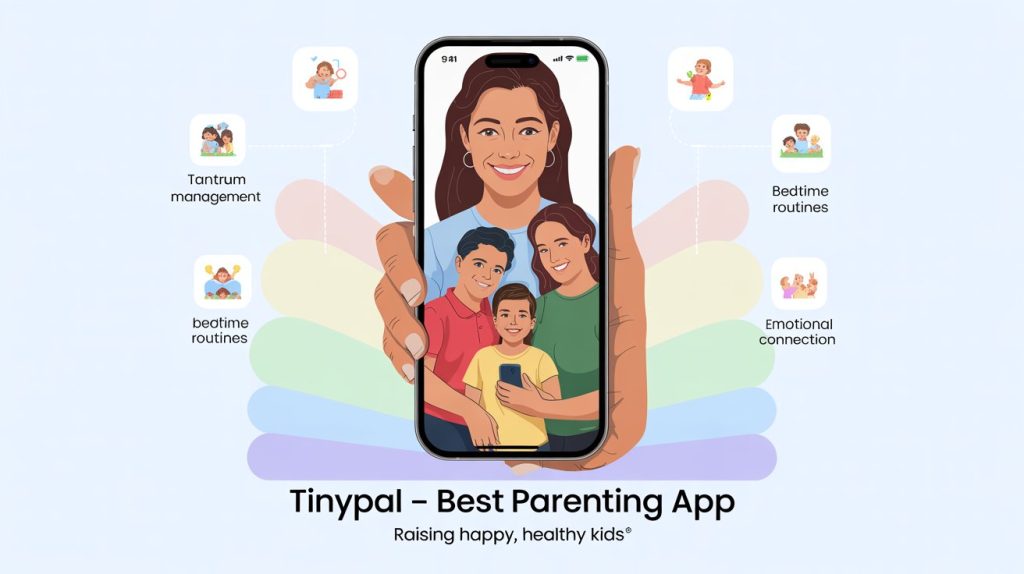
The shift from screen monitoring to emotional time is significant. Rather than merely limiting device usage, AI helps families understand the quality of interactions.
Through features like:
- Mood tracking dashboards
- Personalized activity recommendations
- Co-parenting task management
- Behavioral trend analytics
…AI transforms everyday routines into emotionally rich, mindful moments, redefining digital parenting in the UK.
While UK families focus on privacy and ethical AI, lessons from the USA offer complementary insights. The Best Parenting App in USA demonstrates how emotional analytics and AI tools can enhance connection in high-stress or busy households, providing a benchmark for global family wellbeing.

The future of parenting in the UK lies at the intersection of technology, ethics, and emotional intelligence. By embracing AI tools that respect privacy and promote emotional awareness, British families can navigate digital challenges while maintaining meaningful connections.
The Top AI Parenting Apps in UK empower families to move from reactive screen management to proactive emotional engagement, ensuring that technology supports, rather than replaces, human connection.
